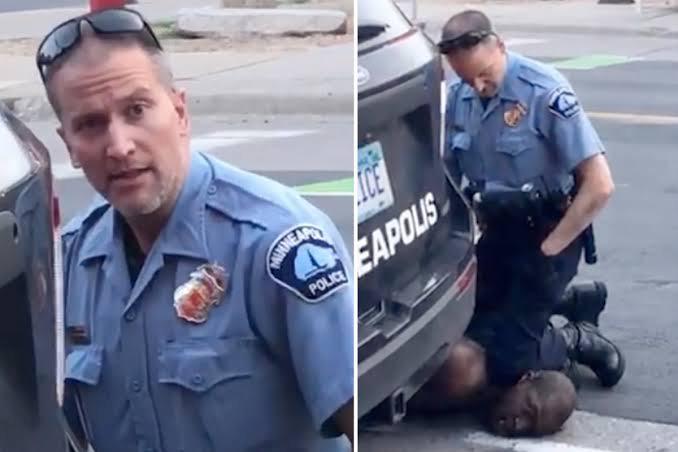
Our country must address the all-too-common shooting of Black Americans by police in situations where the use of deadly force is unnecessary – and would not be used if the police were interacting with white people in the same circumstances. Of course, the problem of police killing Black Americans goes beyond a simple gun problem; police have utilized other types of lethal force, as the murder of George Floyd and the trial of his killer, Derek Chauvin, demonstrate and the chokehold applied to Eric Garner also illustrates. (Sadly, their lives both ended with the same “I can’t breathe” plea, as their killers seemed to take sadistic glee in first abusing, and then murdering them.)
The fact that police killings of Black Americans are often precipitated by relatively minor infractions (or suspicion of such infractions), such as selling single cigarettes, passing a lone $20 counterfeit bill, expired tags and/or air fresheners hanging from a rearview mirror, makes these killings all the more tragic and disturbing. The phenomenon of Black Americans being killed in such circumstances, juxtaposed with the spectacle of white mass murderers being allowed to surrender peacefully and then being treated hospitably is even more maddening.
The serious problem of unjustified police violence against Black Americans has many roots and causes. As Trevor Noah has noted, inherent bias in the system is certainly a problem. Punishing those like Cariol Horne, the Buffalo police officer who stepped in to stop a fellow officer from continuing to apply a chokehold on a handcuffed suspect, instead of punishing the perpetrator of the egregious violence is just one example.
Another problem is allowing those who have no business being in police work to enter the force. This is exacerbated by the failure to weed out those who have been abusive in the past – or allowing them to be hired by other police departments in the unlikely event that they are dismissed from the department where they committed earlier offenses.
There is also a disturbing general lack of consequences for doing the wrong thing – both within the police departments and in the legal system. Police are well-coached on how to avoid repercussions. “I feared for my life” is a common claim in court, and used in a variety of situations where it is very hard to believe, such as when the victim had his back turned to the police officer or was lying on the ground or surrounded by multiple officers.
And in those rare instances where the claim may be true, it is a further indictment of the selection/training process for police. People who fear for their lives to the extent that they use excessive force in ordinary encounters with Black men should not be carrying deadly weapons and be placed in situations where they routinely have such encounters.
And to those who say that only police can judge other police in terms of the reasonableness of their actions in certain situations, while possibly true in split second life-and-death situations, it is utter nonsense in the egregious examples we have seen. That would be like saying only a doctor can judge the reasonableness of another doctor’s actions in the operating room. This may be true in some cases involving technical details, but not if a patient goes in to have a cyst removed from their arm, and the doctor amputates their leg instead. In egregious cases, civilians must pass judgment, because the police forces simply do not do so in any meaningful way.
 Brutal Publicist